The Expatriates by Janice Y.K. Lee (Penguin Books) ~Janet Brown
Margaret, Mercy, and Hilary, three Americans of disparate backgrounds who live in Hong Kong, form the sort of Venn diagram that's usually found in the domestic tragedies of soap operas. Margaret is an affluent mother of three, happily married to a man who was transferred to Hong Kong. Hilary is childless with an indifferent husband who married into money. Mercy has escaped from Queens and her Korean parents by getting a degree from Columbia and an invitation to visit a wealthy classmate in Hong Kong.
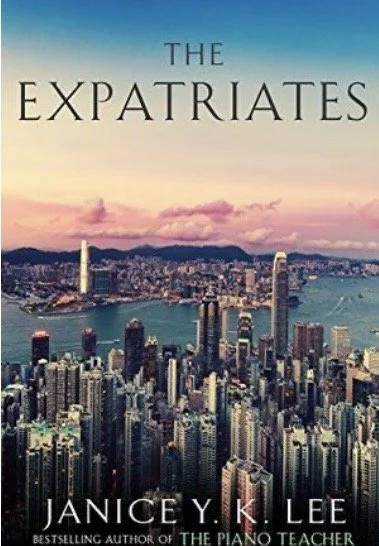
All three have reached crisis points. Mercy has become notorious for losing a child who was in her care. Margaret, the mother of the missing child, is untethered from everyone she loves and has "developed a taste for being alone." Hilary has found a child at an orphanage that her money and connections has allowed her to take on "a test-drive," while her husband has moved out. He's found someone else, a pretty young Korean American woman from Queens with a degree from Columbia and a talent for making "so many bad decisions," Mercy.
All that keeps this from being a Jackie Collins novel transplanted to Hong kong is Janice K.Y. Lee's dissection of the lives of expatriate women in Hong Kong. With the skill of a cultural anthropologist, she anchors her plot with what seems to be a separate essay, cleverly woven into the lives of her characters.
"The new expatriates arrive practically on the hour, every day of the week." Lee quickly establishes the class differences of these arrivals by what they carry as they leave the plane, where they go after they leave the airport, what they will do while living in Hong Kong. Whether they carry a baby or a briefcase, whether they've sat in coach, business, or first class, whether they will make their new home in Chungking Mansions, a serviced apartment, or a house on the Peak, they've all "come to find their future selves." They're all in a place that "can contain some version of yourself that you can finally imagine."
It's easy for the affluent expats. They make temporary friends based on similar "social signifiers," secure in a world they’ll inhabit in three-year increments, moving on to other cities with other tribal affiliations that they'll nurture and then leave behind.
Lee conducts her examination with care and with kindness, rarely leaving the confines of her chosen subject. When she does, her descriptions are precise and evocative. "In spring the odors come...a sharp moldy tinge to the air" that announces the impending arrival of summer's heat. She gives quick sketches of "the vivid tapestry of Hong Kong," with its profusion of small shops in crowded areas and she knows the dismal qualities of rooms rented by the week, "a random slice out of a normal living space" that holds an iron bed, a derelict mattress, and a toilet hidden behind a piece of painted plywood. She knows the familiar sales pitch of wandering fortune tellers: "You are very lucky, sister," and, as she did in her first novel, The Piano Teacher, she shows that life in a furnished room, alone, just might be the best way to learn the complexities of living in Hong Kong.