Sympathy Tower Tokyo by Rie Qudan, translated by Jesse Kirkwood (Penguin) ~Ernie Hoyt
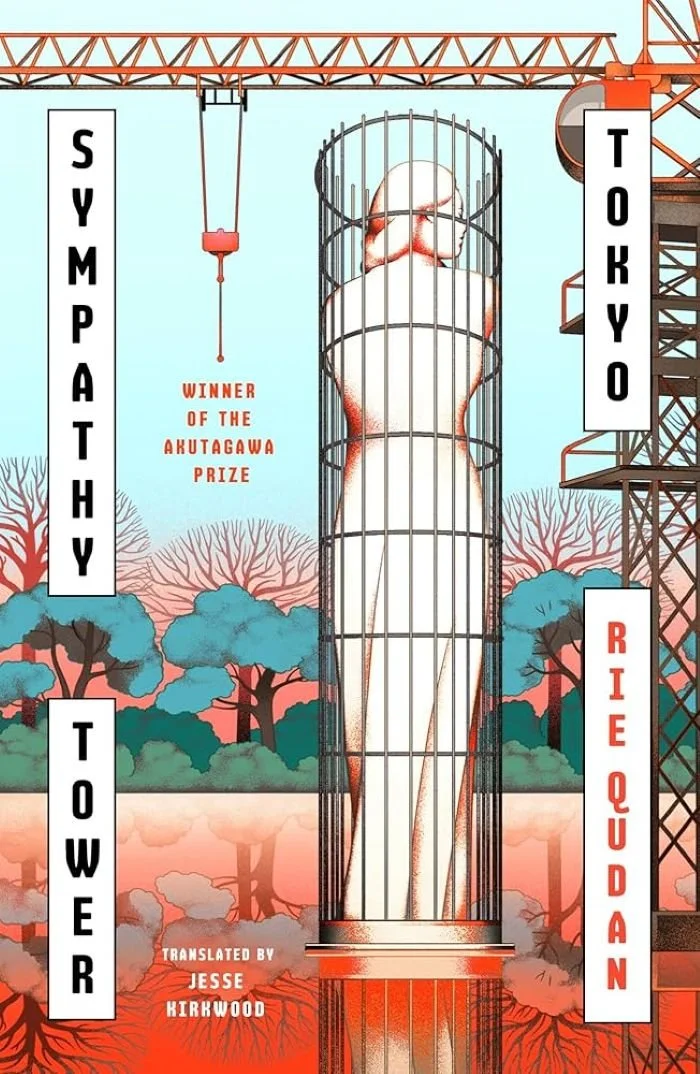
Rie Qudan is a Japanese writer who was born in the city of Urawa which is now part of Saitama in Saitama Prefecture. She made her debut as a writer in 2021 when her book 悪い音楽 (Bad Music) was published. Her first book and her novella Schoolgirl were published in English by Gazebo Books in 2025. The book won the 170th Akutagawa Prize, Japan’s most prestigious literary prize for new writers.
Sympathy Tower Tokyo is her second novel to be published in English. It was originally published in the Japanese language with the title 東京都同情塔 (Tōkyō-to Dōjō Tō) by Shicho in 2023 and was translated by Jesse Kirkwood, a multilinguist who is proficient in French, Polish, and Japanese.
Kudan’s novel is set in the city of Tokyo in the near future and is narrated by a woman architect named Sara Machina, her last name being pronounced as Makina, and her would-be biographer, Takt.
The story opens with Machina having a conversation with herself in her head. Her firm had been chosen to build what would become the centerpiece of Tokyo - Sympathy Tower Tokyo. What bothers her is the excessive use of katakana, a phonetic script in Japanese that is mainly used for writing foreign words, names, onomatopoeia, and scientific terms. Sympathy Tower Tokyo - シンパシータワートーキョー (In katakana English it would be pronounced shin・pa・shee tawa- tōkyō).
So, what exactly is the Sympathy Tower Tokyo? It is the name for a prison that is to be built in the middle of Gyoen Gardens in Shinjuku, one of Tokyo’s most popular botanical gardens.
For Machina, “-the sound of it, the katakana charactersused to approximate the English words, and what those words meant, and all the currents of power swirling around the project - started to bother me, and now there was no going back.”
The more she thinks about it, the angrier she gets. She keeps asking herself, “Why this name?” and her own response to that question is, “Because the Japanese people are trying to abandon their own language”. She can’t understand why the Japanese want to use these foreign words - シングルマザー (shinuru maza / single mother), パートナー (patona / partner), ディファレントリー・エイブルド (diffarentori eiburudos / differently abled) when they have their equivalents in Japanese - 母子家庭の母親 (boshikatei no hahaoya), 配偶者 (haigusha), and 障害者 (shogaisha).
The tower would house homo miserabilis, the new word for 犯罪者 (hanzaisha), formerly “criminal” in English. According to an AI-built, a fictictious chatbot that is similar in design and concept as ChatGPT, the concept was first proposed by the sociologist and happiness scholar Masaki Seto.
Seto had written a book titled Homo Miserabilis : The New Subjects of Our Sympathy. Seto “sets out a caring attitude toward convicts and juvenile delinquents serving sentences in correctional facilities, urging us to consider their backgrounds, personal circumstances and personalities as deserving of pity, tenderness, and compassion”.
Seto also created the term Homo Felix - a word for those who are “happy” or “fortunate”. He emphasizes the “need for Homo Felix to acknowledge their own privilege”. Of course there are those who oppose the building of the tower and argue that criminals, not homo miserabilis, do not deserve sympathy and should be punished for their crimes.
Sympathy Tower Tokyo does get built but during its construction, Machina continually referred to it as the Tōkyō-to Dōjō Tō and the name became more popular in usage than its official title. It would also be the last building Machina designs.
What really makes this novel interesting is Qudan’s use of ChatGPT to write about 5% of the book. However, she later clarifies that AI was used only for the AI dialogue in the book. It’s a book that’s guaranteed to start discussions on language and the use of artificial intelligence, which in my honest opinion, is a good thing.