The Place of Shells by Mai Ishizawa, translated by Polly Barton (New Directions) ~Ernie Hoyt
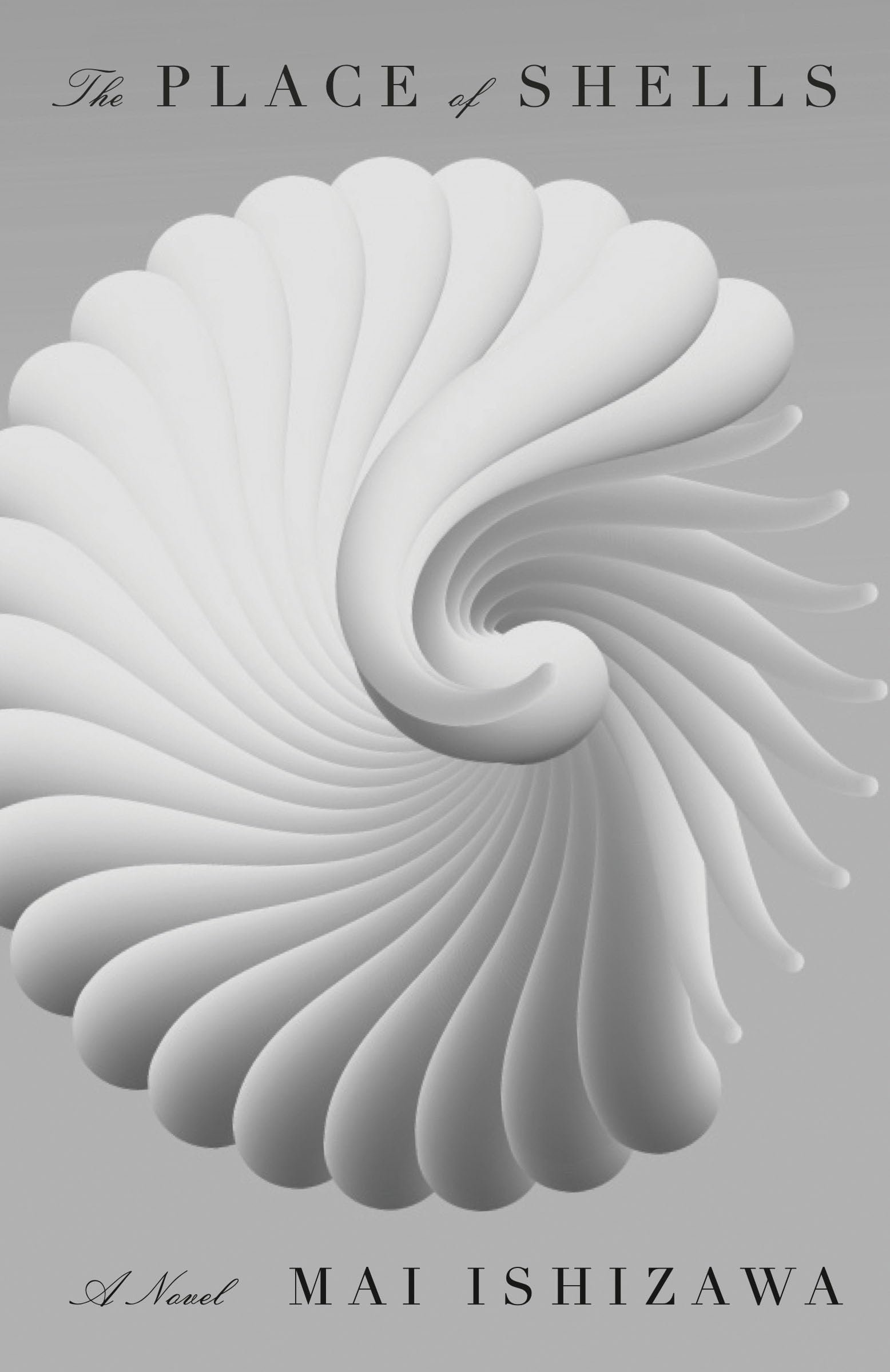
Mai Ishizawa is a Japanese novelist who has lived in Germany since 2017. She was born in 1980 and grew up in Sendai in Miyagi Prefecture. Her debut novel, Place of Shells, was originally published in the Japanese language as 貝に続く場所にて (Kai ni Tsuzuku Basho nite) in the June, 2021 issue of the literary magazine 群像 (Gunzo). It was later published into a book by Bungei Shuju and won the Akutagawa Prize, Japan’s distinguished literary prize, in 2021, along with Taiwanese writer Li Kotomi for her book 彼岸花が咲く島 (Higanbana ga saku shima), translated as The Island Where Red Spider Lilies Bloom although the book is not yet available in English.
It is the summer of 2020. A Japanese student living in the German city of Gottingen is waiting at a train station to meet her old friend Nomiya. It had been nine years since the protagonist last saw her friend. He had died in the 2011 Tohoku Earthquake and Tsunami and his body was never found. Now he’s here in Gottingen, a city known for its Planetenweg, a planetary path made up of scale models of the solar system.
The narrator learned from their mutual friend Sawata that Nomiya would be coming to Gottingham. Although the town was still on a lockdown because of the corona pandemic, the restrictions were slowly being lifted. The narrator went to meet Nomiya with her roommate’s dog.
For the narrator, it was Nomiya’s gestures, rather than his face or his body, “that the nine year gap was attempting to be bridged”. She felt a sense of relief that he appeared solid enough and noticed the sun didn’t shine through him. “He may have been dead but he still cast a shadow at his feet”.
The dog was watching Nomiya from a slight distance. The dog didn’t move and seemed to be a bit hesitant in approaching Nomiya. The narrator guessed that the dog “didn’t realize Nomiya was a ghost, and yet it seemed his behaviour toward any type of stranger was consistent, with no distinction between the living and the dead”.
Seeing Nomiya again after the 2011 Tohoku disaster, made her think about where she was and what she was doing on that day. She was at her family’s house up in the mountains so the thought of a tsunami never even crossed her mind. She remembered experiencing the tremors. The quaking “made cracks appear in the walls in our house. Most of the tiles in the bathroom cracked and fell off, the books came flying from the shelves, various pieces of furniture toppled over, and almost all our tableware broke”.
Ninomiya was in his house in Ishinomake, one of the cities located along the coast in Miyagi Prefecture. Neither the narrator, nor any of Nomiya’s friends could piece together what happened to him after the quake. They “couldn’t work out where and how he had been swallowed up by the water”. Their hopes of understanding what happened to Nomiya in his final moments left a mystery.
Nomiya’s entire house had been desecrated by the tsunami and his entire family had been swallowed up by the water, separately from one another. The sea, “which had remained a stable presence throughout the majority of Nomiya’s time, hadn’t left behind even the slightest trace of their memories”.
After Nomiya’s arrival, the narrator’s roommate’s dog began to dig and bring different items from the forest. A model of Pluto that was part of the Planetenweg (a scale model walking path that maps out the solar system), and was disappearing and reappearing. The strange manifestations all seem to center around the fading memories of people who died in unusual or uncertain circumstances.
The Place of Shells is a surrealistic journey into memories, lost and found. For many of the characters, it is a search for someone or something that has been lost and forgotten. The story makes one open their eyes to death and its effect on those still living.
Polly Barton, who has also translated a number of Japanese titles into English such as Spring Garden by Tomoka Shibasaki (Asia by the Book, March 2026), Where the Wild Ladies Are by Aoko Matsuda (Asia by the Book, May 2022), Hunchback by Saou Ichikawa (Asia by the Book, August 2025), and Butter by Asako Yuzuki (Asia by the Book, September 2025), makes Ishikawa’s prose sound poetic and haunting and makes you think about those friends who have passed that you haven’t thought about in a long time.