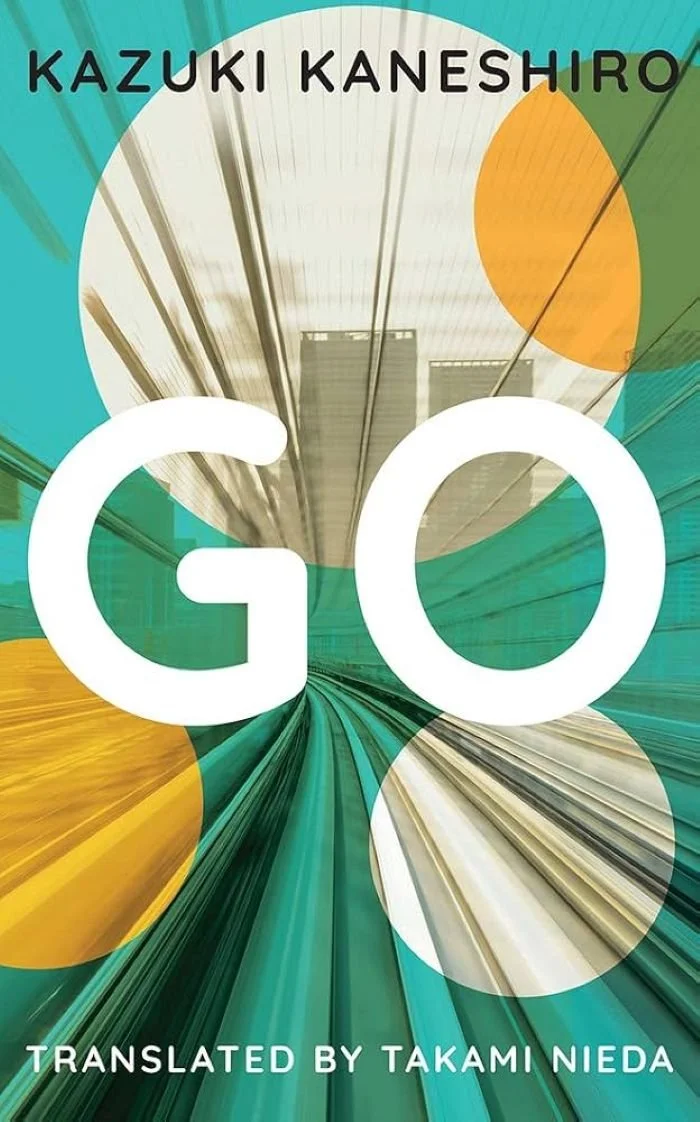
Go by Kazuki Kaneshiro, translated by Takami Nieda (AmazonCrossing) ~Ernie Hoyt
Kazuki Kaneshiro is a Zainichi Korean novelist. Zainichi Koreans or just Zainichi is a term used in Japan for ethnic Koreans who are permanent residents in Japan who have retained their Joseon (Choson), North Korean or South Korean nationalities. They are not to be confused with Korean Japanese who are Koreans residing in Japan but hold Japanese nationality.
Go is narrated by a high school boy born in Japan to North Korean parents. The novel opens with the protagonist talking about a time when he was fourteen years old when he first heard his father mention the word “Hawaii” during a cold snap in winter at their home in Tokyo. His father was fifty-four at the time and held North Korean citizenship. He is what the Japanese call Zainichi Chosenjin, a North Korean resident of Japan. His father was also a Marxist. The narrator says, “Up until then, Hawaii was known in our house as the symbol of depraved capitalism”.
The narrator then tells this reader that what they are about to read is a love story - his love story. “And communism - or democratism, pacifism, otakuism, vegetarianism, or any other -sim for that matter - has got nothing to do with it”. But before he talks about himself, he talks about his parents.
His father decided to start the process of changing his nationality from North Korean to South Korean. So, why did his father, who was born in South Korea, have North Korean citizenship? And why did he have to change his citizenship to South Korean just to go to Hawaii?
When his father was a child, he was a Japanese citizen. Why? Because during World War II, Korea was a Japanese colony. His father was forced to adopt a Japanese name, Japanese citizenship, and learn the Japanese language. He came to Japan when his parents were drafted to work in a munitions factory.
Then Japan lost the war, the government no longer allowed the Koreans to retain their Japanese citizenship. The Koreans who chose to remain in Japan were forced to choose between South and North Korean nationality. His father chose North Korean citizenship because the country’s ideology was suited to what he believed.
The narrator’s mother also gained South Korean citizenship and his parents went off to Hawaii when he entered his third year of junior high school. He didn’t go with his parents to Hawaii. Why? Because when was bron, his parents were still both North Korean so he automatically became a Zainichi Chosenjin.
He rebelled against his father’s changing of his citizenship but his father took him to the ocean in Kanagawa Prefecture, told him to look straight ahead and said, “Take a look at the wide world. You decide the rest.”
That’s when the narrator also decided to become a South Korean citizen. However, he did not go with his parents to Hawaii. Instead, he asked them if he could attend a Japanese school. And so begins the real journey. If his classmates at the Chongryon school were to find out, they would bully him and call him a traitor to the country. His teachers in his new school also told him that he should use a Japanese name to prevent himself from becoming a target of bullies. He was given the name Sugihara.
His first fight happened only three days after he started. The fight was with the son of a yakuza named Kato. Sugihara broke the boy’s nose with an ashtray. A few weeks later, Kato came to talk to Sugihara. He thanked him for breaking his nose as he never liked it to begin with. His father said that Sugihara gave him an upgrade. Kato also invited Sugihara to come to his birthday party that was going to be held at some club.
At first Sugihara wasn’t going to go but against his better judgment, he decided to attend. It was at this gala where he met a girl, a Japanese girl, who seemed to know more about him than he did about her. He did learn that her name was Sakurai.
This spawns the beginning of a relationship, except Sugihara has kept one secret to himself. He has not told Sakurai that he is really Korean. If she finds out, will she accept him? Will she spurn him? Does she have her own prejudices against Zainichi Koreans?
This book is a love story that is still relevant today. Zainichi Koreans are still discriminated against and are treated like second class citizens even though most of them were born in Japan, have Japanese names, and can speak Japanese as well as any native. Even the U.S. has its share of prejudice, especially against immigrants (the current administration only adds fuel to the fire).
If two people are in love and are not hurting anyone, it shouldn’t matter what their nationality is. We humans still have a long way to go in learning about compassion, love, and empathy. Although an idealistic dream, we should all strive for world peace. Sugihara and Sakurai are on the right path.