Taiwan Travelogue by Yang Shuang-Zi, translated by Lin King (Gray Wolf Press) ~Ernie Hoyt
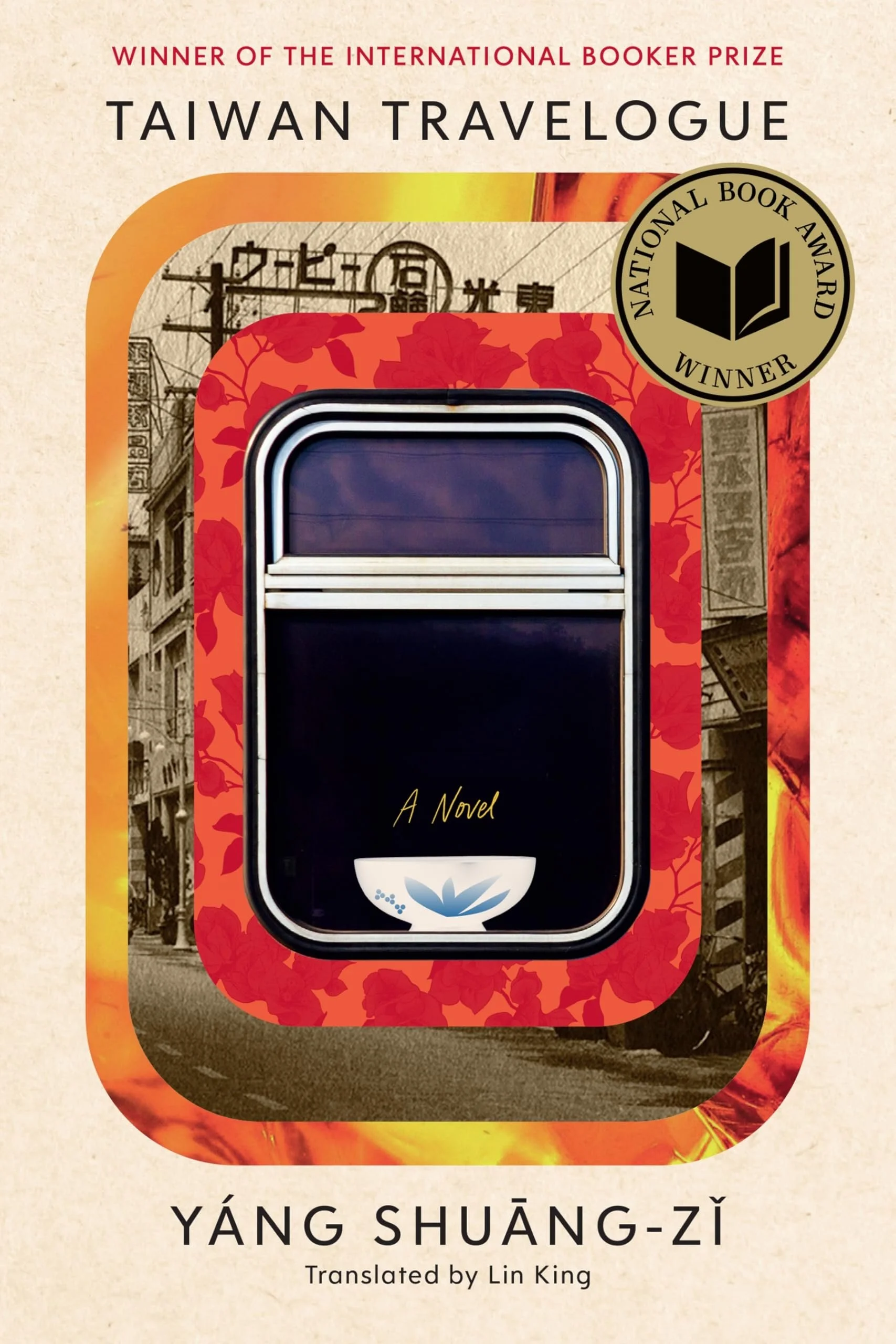
Yang Shuang-zi is a Taiwanese writer who based her book Taiwan Travelogue on a fictional journey by Japanese novelist Chizuko Aoyama’s 1938 visit to Taiwan, a time when Taiwan was under Japanese Occupation. Aoyama was invited there by the Japanese government and her publisher thought it would be a great opportunity for her as Aoyama sensei also likes to travel.
She had a similar proposal in the past from her publisher. They told her, “We would love for you to write a serialized novel set in the South Pacific”. However, Aoyama-san asked the editor of that particular publication, “is that meant to compliment the Southern Expansion Policy?”
She told the editor she was not interested in writing a novel to promote the Empire of the Sun and she already had her next travel destination booked. She was heading for Okinawa. The editor then mentioned that if Aoyama-san was interested in visiting Okinawa, why not visit Taiwan in the future.
Later in the year, her wish came true. It was not only the Government General of Taiwan (run by Japan of course) and a Taiwan-based women's group who invited Aoyama-san on a lecture tour. She would be staying in Taiwan for a half-year or more. She is not at all interested in official banquets or imperialist agendas. She looks forward to trying the local cuisines from different parts of the island.
A young Taiwanese woman named Wang Chien-ho, Ong Tshian-hoh in Taiwanese, and O- Chizuru in Japanese, is soon assigned as Aoyama’s interpreter and arranges all travel needs and is also a good cook. She makes Aoyama’s dream come true of eating truly local dishes. The story is one long culinary journey through Taiwan and is also about the relationship between the women - one from mainland Japan and other from Taiwan.
But what is even more fascinating about this book is the history of its publication and translations which are also included before the story begins and after it ends. The story goes back to 1938 when Chizuru Aoyama in fact went to Taiwan and published dispatches from her travels in mainland newspapers and magazines. The essays came to be known as a series titled Taiwan Travelogue.
However, the Taiwan Travelogue essay series does exactly correspond to the novel Taiwan Travelogue which was originally published in 1954, fifteen years after Chizuru Aoyama’s Taiwan trip. The book is an autofiction of her extended stay in Japanese occupied Taiwan.
After the book went out of print, Chizuko Aoyama’s adopted daughter, Yoko Aoyama fulfilled her mother’s dying wish. To have Taiwan Travelogue reprinted and to give it a new title. Her mother also wanted her to take the book to Taiwan as well. The book was reprinted with the new title, My Taiwan Travelogue with Tshian-hoh.
The first Mandarin Chinese translation was published in 1977, however a new Chinese edition which was self-funded and self-edited was published in 1990 with the title A Japanese Woman Author’s Taiwan Travelogue. The book was published and translated by Ong Tshian-hoh’s eldest daughter, Wu Cheng-mei.
A new Mandarin edition of Taiwan Travelogue was published in 2020 by Yang Shuang-Zi. Shuang-Zi and her late elder sister were traveling in Japan and happened upon a postcard written by Aoyama Chizuko at the Hayashi Fumiko Memorial Reference Room located in the historical building of the Former Moji Mitsui Club. At the time, the sisters were doing research and fact-checking for a historical novel set in Japanese colonial Taiwan.
Once they returned to Taiwan, their research led them to the Museum of Taiwan Literature. Unfortunately, they were informed by an administrator that the data they were looking for did not exist at their facility, but told them there was a Japanese researcher who was in possession of the complete manuscript and they were granted permission to contact her directly.
This leads them to Hiyoshi Sagako, a fictional translator and scholar. In the book, Sagako writes an introduction to the new Mandarin edition of Taiwan Travelogue which was published in 2020. Sagako describes herself as a wansheng which is a word to describe Japanese people born in Taiwan.
Her fictitious introduction helps readers to understand the perspectives of the various characters they will encounter while reading. She explains, “By blood we belonged to the great Yamato race, but as Japanese citizens we were “subpar” and continued to say, “Even if our bloodlines were “pure”, many Japanese people argued that we could not possibly possess the true “spirit” of the Japanese people. Thus, the wansheng were often regarded as inferior”.
One more important aspect of understanding the novel is to read this introduction. It sets up the framework of the story. She goes on to say, “No matter how much the Japanaese administration in Taiwan promoted their official stance that all Taiwanese peoples were as much the children of the Emperor as any Japan-born person, the reality was that Taiwanese “Islanders” were second-class citizens.
The book I have just finished reading is the latest English translation of Taiwan Travelogue. It was translated by Lin King and published in 2024. King is a Taiwanese-American writer and translator. She was born in New York to Taiwanese parents who both worked for architectural firms in the United States for nearly ten years. King was one-year old when her parents moved back to Taiwan.
King believes that the two main characters in the book - Aoyama and Chi-chan (O Chizuru) would be tickled by this latest edition. A Taiwanese translator, while bringing this book to the ultimate colonial language of English, has struggled to determine how the Japanese colonial government would have pronounced Taiwanese terms and therefore consulted the Japanese translation of a Taiwanese novel that claims to be a Taiwanese translation of a Japanese novel.
Oh, the complexities that went into bringing this story to English-readers. You might feel at a loss to determine if all the translator's notes are fictional or not. Still, be sure to have some snacks handy as I guarantee that you will become hungry while reading this novel.