At Home In Japan : A Foreign Woman’s Journey of Discovery by Rebecca Otowa (Tuttle Publishing)

As the subtitle states, this is one woman’s journey of discovery in which she learns what living in Japan is like.  In my opinion, most people who think of moving to Japan either consider the twenty-four hour metropolis of Tokyo or the kuidaore (eat until you drop) city of Osaka.  However, this is the story of how Otowa finds herself in a 350-year- old farm house in rural Kyoto where she has lived for the past 30 years.

At Home in Japan

At Home in Japan

Otowa, a California native whose family immigrated to Australia when she was in her teens, never thought she would live anywhere but Australia or the States.  Then she finds that she enjoys studying the Japanese language which leads her to major in Asian studies at a university in Kyoto. Here she meets her future husband, who once traveled alone to Australia and loved it.  Through a mutual acquaintance, he learns that a girl from Australia is studying in Kyoto and goes there to meet her. He and Otowa hit it off right away and they marry four years later.

Otowa says she didn't know what she was getting herself into.  For one thing, her fiancé is the chonan (eldest son) of a very traditional Japanese family. This means it is his responsibility to take care of his parents, their farm house and their land.

Otowa has to learn a lot of unwritten rules. As an American, she finds some of them quite annoying, such as the wife is the last one to use the bath.  Even her wedding is planned by her future in-laws who tell her that it would be rather difficult to have her parents participate, so she has a stand-in for her father at her own wedding.  Otowa says at that time she was still naïve and a little intimidated by the entire process--now she regrets not speaking her mind back then.

But Otowa grows to love Japan and traditional country life.  She feels she’s becoming more Japanese while the younger generation of Japanese are becoming more westernized.  Otowa shares with us her experiences of traditional Japanese life such as making omochi (rice pounded into a glutinous mass and served with the traditional New Year’s meal called osechi) Enjoyinghanami (cherry blossom viewing) in the spring and tsukimi (moon watching) in the fall.  Serving and drinking tea in a tradition called sado which roughly translates to “the way of tea”.  Taking part in, and explaining, the ritual of  a traditional Japanese funeral..  She shares with us both her happy and sad moments, along with certain nuances of living in Japan, as if she were talking to us as friends.

She describes her relationship with her family, friends, neighbors and the various deities that live in the old farmhouse. When she first saw her husband’s house, she admits she was taken aback.  The house was built sometime in the 1600s and expanded as the family has grown.  Showing some pictures of her husband’s family and home that were taken in the 1800s, she reveals that the house hasn’t changed much over the centuries.

As my own grandmother’s house is a very traditional Japanese house as well, I found that I could relate to Otowa’s descriptions of spending the winter under a kotatsu (small table with a heater underneath), stoking the fire for the bath, being afraid of falling in the toilet that was only a hole in the ground (or so I thought as a child), walking up the steep stairs to the second floor, playing “Perfection” (popular game back in my youth) with my cousins along a wooden corridor that looks out to a small garden.  Reading Otowa’s book reminds me of my childhood and makes me long to go visit my grandmother’s house once again.~by Ernie Hoyt

Ivan's Ramen by Ivan Orkin (Little More)

If you’re an expat living in Tokyo like me, one of the first things you will probably fall in love with is ramen.  It’s the fast-food of Japan.  There are over 5000 ramen shops to choose from in Tokyo alone.  But Ivan Ramen has something that no other ramen shop has in Tokyo, or perhaps even in Japan.  Ivan Ramen is the only ramen shop in Tokyo that’s own and run by an American – Ivan Orkin.  What makes this story so amazing is that Ivan did not even know how to make ramen before he started his restaurant.

This is his story of how he followed his dream.  Ivan takes us back to his roots in New York City where he was born in a small Jewish neighborhood.  His father was a lawyer, while his mother enjoyed hobbies such as painting and photography.  They had a house-maid who did all the domestic chores and left his mother with free time to pursue her favorite activities.  As the family was pretty well off, one of Ivan’s earliest memories was of his parents taking him to different restaurants.  Even at a young age, it was these trips to various restaurants that would mold Ivan into what he is today.

Ivan Ramen

Ivan Ramen

Ivan’s first introduction to Japanese cuisine is at 15 when he works part-time as a dishwasher at a Japanese restaurant called “Tsubo”.  It’s here where he gets his first taste of Japanese cuisine starting with tamagokake gohan. This is plain white rice that’s topped with a raw egg and perhaps a dash of soy sauce, and is not on a regular menu.  Ivan has such fond memories of working here and with the Japanese staff that he decides to study Japanese in college.

In college, he becomes fascinated with ramen after going to the movies and watching Juzo Itami’s “Tampopo”, and if you get a chance to watch the movie, you may become a ramen convert yourself.  After graduating, Ivan makes his first trip to Japan as a teacher of English, a job where he found no satisfaction.  Realizing that he enjoys cooking,  he returns to the States and enrolls in the prestigious Culinary Institute of America.  Back in the States, Ivan longs to eat the ramen he tasted while in Japan but the only place to get good noodles in New York at this time is in Chinatown.  Eating the noodles there, he has an epiphany--to move back to Japan and start his own ramen shop.

With the help and support of his Japanese wife, he heads back with  her to the Land of the Rising Sun.  But Ivan as yet does not know the first thing about making ramen.  Fortune shineds upon him as he finds someone to teach him the skill he needs.  Soon, Ivan decides to open his own ramen shop.  This is much easier said than done.  First off, a lot of people say he is crazy to even attempt such an adventure.  Others say there was no way that an American could run a successful ramen shop.  Even with all the pressure and negative responses, Ivan follows his dream with determination.  With his wife and two friends, Ivan finally opens his shop in Tokyo’s Setagaya Ward near Rokka Koen Station.  News of an American owning and running his own ramen shop in Tokyo brings in curious customers.  His shop gains popularity from word of mouth and becomes a big hit in the ramen community.

Being a ramen fan myself, I most definitely had to go to Ivan Ramen.  I can assure you that the pictures in the book are as eye-pleasing and appetizing as the real thing.  This is probably the only ramen shop in Tokyo where you can also order hand-made ice cream from their menu.  Ivan’s concept is to have a family-friendly atmosphere where you can dine on delicious ramen, using only uses fresh ingredients which he buys locally.  He also makes his own noodles at the shop.  In fact, his kitchen space is twice as large as the dining space where he continues to experiment with new menu ideas.  If you get a chance to visit Tokyo and crave ramen for lunch, Ivan Ramen is a must-stop on your itinerary.

Chinese Lessons: An American, His Classmates, and the Story of the New China by John Pomfret (Holt)

Sixty-three history majors graduated from Nanjing University in 1982. One of them was an American, 25-year-old John Pomfret, who went to China in 1980 to learn the language and to attend university there as an exchange student from Stanford. How Pomfret's life was transformed by his youthful decision, leading him to become a journalist in China, where he met his wife and started a family, is an interesting story. It is overshadowed, however, by stories that are far more compelling: the lives of four men and one woman who were his classmates. All  of the people who opened their lives to Pomfret had lived through the Cultural Revolution and had seen how Chinese social values were turned upside down during that time. Daybreak Song's father was a Red Guard, and Big Bluffer Ye learned how to play the system by watching his father do the same. Old Wu, whose parents were killed by Red Guards when he was 15, later denounced them in order to become a Communist Party member. Little Guan, whose father was sent to a re-education camp for four years, spent her early adolescence working in the rice fields as a "class enemy." Book Idiot Zhou, who was on a Red Guard team, admitted, "I did what I was told and, being eleven, I liked it." "You need to understand this," he told Pomfret, "to understand where we've come from."

ChineseLessons.jpg

All five entered the University in 1978, when private businesses began to sprout, foreigner students appeared in their classes, and Gone with the Wind was so popular in its Chinese translation that students took turns reading it  in shifts. Daybreak Song's popularity with Italian girls launched him into a love affair that led to marriage and a life in Italy after graduation. Big Bluffer Ye joined the Communist Party with dreams of making Nanjing modern and prosperous; after graduating and becoming a bureaucrat, he was able to transform a neighborhood into a Las Vegas-inspired shoppers' paradise. Book Idiot Zhou, to augment his earnings as a teacher, began a business that collected human urine and extracted enzymes that were used in pharmaceuticals. Little Guan married the man she had chosen two days after graduation, refusing a job assignment to be with her husband and make a family and a home. Old Wu, Pomfret says, was doomed to "a lifetime of humiliation," writing censored history and investigating the "antiparty" activities of university colleagues.

As China becomes more affluent, so do Pomfret's classmates. Old Wu learns to use the Internet, takes driving lessons, and sends his daughter to school in Australia. Big Bluffer Ye has an Audi and a chauffeur. Book Idiot Zhou owns a Volkswagen and a brick house that he has built in his ancestral village. Daybreak Song, living in Italy, is a highly paid sportswriter for a Chinese newspaper. Little Guan, a widow, owns her own apartment, has invested in a bar, and has embarked upon an e-commerce business venture with her son.

Through his personal history and that of his classmates, Pomfret has provided a look at China that is both intimate and illuminating. Few people would have been able to write this book; many will be grateful that John Pomfret did.~by Janet Brown (previously published in another form by Waterbridge Review)

Japan Took the J.A.P. Out of Me by Lisa Feinberg Cook (Downtown Press)

Before some people, especially Japanophiles, are offended by the term J.A.P., Cook uses the term to describe herself -- a Jewish American Princess--one who is used to having things her own way, to driving her red Jetta around town, to having her weekly pedicure/manicure and to meeting  her girlfriends for drinks and fun.   However, this entertaining memoir is of a year that changes Cook's life as she becomes a newlywed and less than a week later moves to Nagoya, Japan with her new husband who ha a job waiting for him there.

Japan Took the J.A.P. Out of Me

Japan Took the J.A.P. Out of Me

I knew I would be both amused and annoyed by this book, as I could tell from the first paragraph that Cook was going to be in for a major culture shock.  During her first year in Japan, her attitude is so Ameri-centric and selfish, it borders on being hysterical (from this expat's point of view anyway).  Her husband's contract is for two years which Cook at first doesn't consider a long time until she gets a wake-up call when she arrives in Japan on a blistering hot day. Unlike the bustling metropolis of Tokyo or the history-filled city of Kyoto, the city she finds herself in is Nagoya.

Cook does not speak the Japanese language. Does not have a job.  And although the school her husband works for provides them with housing, she has to learn to do things she never imagined herself doing.

Her first transition into domesticity is doing the laundry.  In her first attempt it takes her almost four hours to do a light load.  The machine becomes her only friend-- and adversary--for the first few months. But sitting around doing nothing aside from the laundry can lead to stress and Cook takes up a habit she hasn’t had in a long time – smoking.

Through some of her husband’s contacts, Cook is introduced to a woman who offers her a teaching job at a local school.  As Cook has taught in the States, she’s happy to accept the job which gives her another taste of culture shock.

In Los Angeles, Cook got from one place to another in her red Jetta which she loved. In Nagoya she has to use something she thought she would never experience –public transportation. To get from her house to the school, she has to take a bus to the train station, make two transfers, then take a short walk to where the school is located.  It is here that she learns what crowded really means!  She also learns how it feels to be different and strange.

Cook spends two years in Japan but writes only about her first year.  In an interview included at the end of the book, she mentions that in her second year, things weren’t as challenging and she fell into a familiar routine.  It’s a great story about change--maturing from a single life in Los Angeles to married life in a foreign country and the experiences that come with it.

As an expat who moved to Japan from the States myself, I could laugh at--and relate to-- a lot of Cook’s stories  Unlike her, I had knowledge of the language as well as experience living here before moving here permanently  I was hoping she was going to write about her second year as well, but the story of this first year is enough to keep you entertained and will put a smile on your face.~by Ernie Hoyt, Tokyo resident

カレーになりたい!by 水野仁輔 [I Want to be Curry!] by Jinsuke Mizuno (理論社(Rironsha)

This is not a curry cookbook, although there is one curry recipe at the very beginning of the book. It is also not a guide book to the curry shops of Tokyo.  It's a book about Mizuno’s love for all things curry-- his early curry memories, his first overseas trip to the home of curry--India, and his descriptions of visits to all the curry shops and curry he's tried in Japan. He has become a member of Tokyo Curry Bancho, has sponsored curry events, has collected boxes of retro curries and miscellaneous items related to curry, and, he informs us, has accumulated enough curry items to open his own curry museum.

The book opens with Mizuno asking his readers, “When was your first kiss?”  He imagines the responses given, but says, “No, no, no.  Not your first kiss with a person but your first kiss with curry”.  He writes as if he is talking to us, persuading us to share with him our own curry memories.

I Want to be Curry (1)

I Want to be Curry (1)

He tells us the first thing that comes to his mind is a large elephant, as he describes his parents taking him to a place where a woman was singing in a language he had never heard before.  The place was Hamamatsu in Shizuoka Prefecture and the name of the restaurant was  “Bombay,” specializing in Indian curry.  The elephant that he recalls was part of the store’s sign.

All this at the tender age of five--but from this beginning, he was hooked.  He tells us when he was in Junior High, that he would save some of his allowance so he could treat himself to curry at “Bombay” which became his favorite curry shop.

As Mizuno grows older, he leaves his home town to go to university in Tokyo and is no longer able to get his weekly fix of “Bombay” curry. Mizuno then buys a guide book to curry shops around Tokyo, goes in search of a curry that has the same flavor as “Bombay,” and starts to work part-time at an Indian restaurant.

After trying nearly 1000 curry shops (and there really are quite a few in Tokyo), he comes across a place called “Delhi” which serves the curry of his memory.  He learns that the owner of “Bombay” got his start here and is amazed that he could pick this one restaurant out of the thousands to find the same flavor as that of his first love.  This sets him on a serious path to becoming Tokyo’s Curry Bancho (loosely translates to “Curry Boss”).

Realizing that being serious about curry means checking out the roots of the food, Mizuno travels to India where he learns that not all Indian curries are the same.  Traveling to all the major cities of India, he experiences the various curries throughout the country.  With the knowledge he gains from this, he continues to experiment with his own style of curry.

Mizuno doesn’t just sample the curries made in restaurants, he tries the vacuum-packed brands as well.  Japan has an incredible amount of ready-made curry packages, some only available in the prefectures that make them.  If you’re as much a  curry lover as I am, then Mizuno’s memories makes for some non-stop reading fun – and will make you hungry for curry as well.--By Ernie Hoyt

This is the first of Asia By the Book's reviews of books that have not yet been translated into English--but that we hope will soon be available to readers of English, as well as (in this case) Japanese!

Exploring Hong Kong: A Visitor’s Guide to Hong Kong Island, Kowloon, and the New Territories by Steven K. Bailey with photographs by Jill C. Witt (ThingsAsian Press)

My favorite guidebooks are the ones that give me the background and the little tips that make me feel like a resident when I am visiting, so naturally I look for guidebooks written by people who have lived in the place they write about. While in Hong Kong recently, I was given a copy of Exploring Hong Kong, began reading it at night in my hotel room and gobbled it in one sitting—it is that sort of book—informative, conversational and absolutely gorgeous. From the clarity of its maps to the beauty of its photographs to the satisfying weight when held in the hands, it is a lovely object as well as a very good book indeed.

9781934159163-AMZN-2.jpg

What Exploring Hong Kong is not is a laundry list of hotels and restaurants and shops; what this book gives you are neighborhoods--ways to explore them, how to reach them and what to enjoy when you get there. It offers the conventional sightseeing destinations and then gives pointers that only a resident would know—the exact details of how to ride the Travelator, the most challenging way of hiking down Victoria Peak, where to find a tiny piece of Thailand in the shadow of Kowloon Walled City Park, the best vantage point for viewing the nightly Symphony of Lights,  which of Kowloon’s street markets is the place to buy “hell money,” where to find pink dolphins off the coast of Lantau Island and where to go surfing on the island of Hong Kong

The natural world is still alive and well in Hong Kong and its environs, Bailey tells his readers, and a large portion of his book tells how to enjoy this little-known facet of one of the world’s great cities. Wild boars, feral cattle, macaques, packs of dogs that resemble Australia’s dingoes are some of the wildlife that visitors may encounter when they leave the sidewalks behind, and mountain climbing, kite flying, and tent camping are offered as alternatives to Hong Kong’s more urban pleasures. Ancient walled villages and “a windswept island of ghosts” are  easy  to reach and explore when readers are provided with Bailey’s careful and lucid instructions.

Perhaps the most invaluable information provided by Exploring Hong Kong is found in its first chapter, Traveling Around Hong Kong: An Instruction Manual, which explains why Hong Kong’s biggest bargain is its Octopus card. But as a devoted eater, I am most fond of the hints on where to find the best egg tarts, where to drink the highest form of available caffeine, tea mixed with coffee, where to find Five Flowers Tea, and where migrant Filipinas find their favorite comfort food.

Whether you will be in Hong Kong tomorrow or are planning to visit “someday,” Exploring Hong Kong is essential reading. Bailey and Witt, who launched their series with Strolling Macau, say their latest wanderings have been in Hanoi, with a guidebook to that city coming soon. I’m ready to go…~by Janet Brown

Available at ThingsAsian Books

Tokyo Vice : An American Reporter On The Police Beat In Japan by Jake Adelstein (Pantheon Books)

“Either erase the story, or we’ll erase you.  And maybe your family.  But we’ll do them first, so you learn your lesson before you die.”  An ominous beginning to a true story told by an American reporter who worked the crime beat for one of Japan’s best known newspapers – the Yomiuri Shinbun (the Japanese paper, not  its English- language equivalent) which has a circulation of more than ten million a day.

The man who threatened him was a yakuza enforcer whose boss was Tadamasa Goto – a leader of the notorious yakuza gang, the Goto Gumi--and the subject of a story Adelstein was working on.  The yakuza boss had gotten a liver transplant at the Dumont-UCLA Liver Cancer Center for which Goto allegedly spent nearly a million US dollars. Some say the amount was actually three million and that some of the money was sent from Japan to the US through a casino in Las Vegas.

Tokyo Vice

Tokyo Vice

What made this a scoop to Adelstein was the question of how the man was able to get into the States.  He was on the watch list of U.S. Customs and Immigration, the FBI, and the DEA.  He was blacklisted – he should not have been able to set foot in the country.  And how did he become a priority for a liver transplant?

However given an ultimatum by Goto’s enforcer, Adelstein chose the path most of us would probably have also taken – he did not report the story.  Unfortunately, this decision would come back to haunt him.

There are a lot of books about Japan’s mafia – the yakuza, written by former yakuza members and people who have infiltrated the various gangs, including Yakuza Moon, written by the daughter of a former yakuza boss.  But Adelstein’s book isn’t just about the yakuza – it’s about the underside of Tokyo, in which the yakuza play a big part.  It’s about the Tokyo you won’t read about in any guide books.  It’s about the seamier side of life in one of the world’s biggest metropolis.

Adelstein takes us on his journey from becoming a student at Sophia (Joichi) University, to extending his studies of the Japanese language, to taking the “entrance exam” for the Yomiuri Shinbun, which is “kind of a newspaper SAT”. “If your score is high enough, you get an interview, and then another, and then another.  If you do well enough in your interviews, and if your interviewers like you, then you might get a job promise.”  Not only did Adelstein do well and pass all his interviews, apparently his interviewers liked him and told him to report for duty the following month or so.

As a cub reporter, Adelstein is first sent to Saitama Prefecture which people jokingly refer to as the New Jersey of Japan.  As he works closely with the police, he gets his feet wet by working on stories such as a juvenile using a bestselling book titled “The Perfect Manual of Suicide” for its intended purpose, a murder case of a snack-mama in Chichibu, and another murder case by a dog breeder in Saitama.  Finally, Adelstein gets transferred back to Tokyo, to Shinjuku Ward’s Kabukicho District – the Red Light Area of Tokyo where he is to work with the Tokyo Police Vice Squad.

The cases he writes about while working in Shinjuku make his Saitama stories seem mild in comparison.  One of his biggest news pieces was the Lucy Blackman story, a foreign woman who was raped and dismembered with her body parts hidden in a cave. He also wrote about the ATM thefts where the criminals would use a truck and a jackhammer and take out the entire machine in just a few minutes.  But when Adelstein uncovers the story of the nearly impotent Japanese government not doing anything about human trafficking, the book really picks up steam and reads like a non-stop thriller.

Although Japan is still safer than most countries in my opinion, it is not totally devoid of violence and crime.  And one cannot really tell the difference between a yakuza and a hard-working salaryman as the yakuza also have their hand in a lot of legitimate businesses.  It still amazes me that the yakuza can have their own businesses when the police know they’re guilty of racketeering, loan-sharking, human-trafficking, extortion and other crimes.  But still I love living in my adopted country.--Review written by Ernie Hoyt

Brothers by Yu Hua (Picador Asia)

If Mark Twain were alive and well in the twenty-first century, Huckleberry Finn would be an American version of Brothers. These books have everything in common except for the bawdy, ribald satire that fills this novel by Yu Hua.  Without the cultural restraints that hampered Mark Twain, certainly  Huckleberry would have happily joined Baldy Li in his fourteen-year-old adventure in voyeurism, peeking at female buttocks in the public toilet.

brothers

brothers

If not for his mother's second marriage, Baldy, like Huckleberry, would have been an individualistic rascal "lighting off for the territory" alone but fate provided him with a brother. The son of Baldy's stepfather, Song Gang shares none of his new brother's gene pool but swiftly becomes his comrade in survival--and later his romantic rival.

Brothers was published in China as a work in two volumes; in the West it was presented in a single volume divided into two parts, which does not work to the novel's advantage. This is clearly two separate books with two jarringly different moods. When jammed together In one volume, what its translators describe as "subversive humor" rubs jaggedly against what they term "haunting sentimentality."  It's as though the tragic heroism found in The Grapes of Wrath was followed by the unsparing, savage satirical voice of Evelyn Waugh.

Hua's first book is haunting but far from sentimental. When Baldy's heroic stepfather is battered to death on the street during the Cultural Revolution and his son and stepson find his corpse, there is no sentimentality in the rather callous way they examine a body so disfigured that they are unable to recognize the man they both deeply love.     Even the most tender scene between the children and their father, a trip to the ocean on a moonlit night, avoids bathos by being placed between the destruction of the family's home and the imprisonment that leaves the boys to become a solid unit, depending only on each other for their survival. The violence of this turbulent period in Chinese history is accompanied by the examples of heroes--both parents of Song Gang and Baldy Li have strength and courage in epic quantities.

And then history takes a hard twist and so does this novel. With the onset of free enterprise and untrammeled wealth, heroism dissolves and so does the bond between the two brothers. Song Gang, besotted by love, becomes a uxurious fool while Baldy Li, still obsessed by his adolescent glimpse of the perfect bottom that belongs to his brother's wife, hurls himself into making money. There are no heroes in this landscape shaped by energy and greed--only successful businessmen.

And business destroys goodness in grotesque and horrible ways, stripping away the dignity that the brutality of the Cultural Revolution was unable to extinguish. Heroism is swallowed up by instant gratification and virtue is destroyed by the search for glory that only money can provide. Death in the first portion of this book was reason for deep sadness; in the second part, nobody--not even the reader--truly cares.

And as Brothers ends with Baldy Li planning to carry Song Gang's  ashes on a purchased space-shuttle ride, a scheme that he hatches while "perched atop his famously gold-plated toilet seat," the thought arises,  how would Huckleberry Finn conclude in 21st century America--on Wall Street? In a homeless shelter? Selling masculine extensions over the Internet? Or would Huck be on his way, perhaps with Baldy Li, to colonize the moon?

The Reluctant Communist: My Desertion, Court-Martial, and Forty- Year Imprisonment in North Korea by Charles Robert Jenkins (University of California Press)

“In January of 1965, twenty-four-year-old U.S. Army sergeant Charles Robert Jenkins abandoned his post in South Korea, walked across the DMZ, and surrendered to communist North Korean soldiers standing sentry along the world’s most heavily militarized border.”

There has been a bit of controversy surrounding this book in the United States, Jenkins being an army deserter and all. But how can readers not be fascinated by the story of someone who lived and managed to survive for more than forty years in the reclusive Stalinist regime of North Korea? The biggest critics seem to be those who already have their preconceived opinions about him and are probably ignorant of most of the facts surrounding his story. Take for instance, the lady who says, "I don't know why he chose to come out now if he liked it there so much." This is obviously the opinion of someone who has not read his book.

reluctant_communist_cvr.jpg

It’s an extraordinary story because it is not only about Jenkins’ army desertion.  For the forty- plus years Jenkins spent in North Korea, he says he's lived a fairly ordinary life. Perhaps he lived a little better than some of North Korea's own citizens, but that doesn't mean he's had an easy time of it. He claims he was young, drunk and stupid when he crossed the DMZ, afraid that he was going to be sent to serve in Vietnam. He didn’t realize that his decision would have him stuck in another country for the next forty years

We probably would never have heard of Jenkins if it hadn't been for Japan’s biggest news of the decade when Prime Minister Junichiro Koizumi met with Kim Jong-il in Pyongyang.  It was at this historic meeting that Kim Jong-il admitted to his country’s program of abducting Japanese nationals and having them serve as instructors in the Japanese language and customs at spy schools located throughout North Korea.  Unfortunately, the talks were not as productive as had been hoped because the total number of abductees could not be confirmed with North Korea maintaining that there were only thirteen, with just five still surviving. One of the survivors was a woman named Hitomi Soga, Jenkins’ wife.

Jenkins fills us in on his life in North Korea in chronological order. He tells of his surrender-- which he had believed would be a temporary condition that would lead to his being rapidly sent back to the States where he would face a short jail sentence –- to his indoctrination into the communist regime. He describes meeting and being imprisoned with other defectors (who were mostly running from the law, or as Jenkins says in his own words, “were total fuck-ups as soldiers”), people who would eventually become his closest friends and, at times, his worst enemies.  A bit of sunshine and hope is visited upon him in 1980 when he marries Soga and starts a family.

The story becomes even more interesting when Soga and a few other abductees manage to escape from the country with the help of the Japanese government).  The abductees were given permission to visit Japan and their relatives on the condition that they would return to North Korea in a couple of weeks.  Instead they formally removed the pins of Kim Jong-il (which they were required to wear) on Japanese national television and refused to go back.  And so begins a new chapter as Soga works hard to get the rest of her family out of North Korea.

Before vilifying Jenkins, one should read this story of a young man who was scared, homesick and drunk, who now admits that he made the worst decision of his life by crossing the DMZ into North Korea.  It’s an inspirational story as well as the story of making a terrible choice-- he survives, finds love, has children, and in the end, is able to leave North Korea to join his wife in Japan.  Their children, who were both born and raised in North Korea, find themselves becoming new Japanese citizens, but that will probably be the subject of another book.  ----by Ernie Hoyt

My Top Ten (Books) for the Past Ten (Years)

I read as though I'm trying to catch a virus. What I look for are books that will live inside me and haunt me when I try to sleep. I want to gobble books that will treat me as a host, gathering strength as they inhabit me, emerging when I least expect them to. When I was recently in Vientiane, I thought repeatedly of James Fenton in that city decades ago, being startled by a Prathet Laos soldier who leaped at him from behind a bush, snarling with all teeth bared. He was grateful for this, Fenton said, because finally something memorable had happened to him in Laos' capital city. When I'm in Hong Kong, I'm accompanied by the ghost of Emily Hahn, as she races around an occupied city trying to scavenge food for her imprisoned lover and their baby, and in Phnom Penh I see, beneath the chaotic development that characterizes that city today, the deserted, eerie streets that Francois Bizot describes so well in The Gate.

The books that comprise my Top Ten List for the first ten years of 2010 are books that I carry with me wherever I go. They're like a phantom limb, invisible but always present, and sentences from them echo when I think my mind is empty. Each of them explains a portion of the world to me in some way, although it sometimes takes years for me to discover precisely how they do that. They are all extremely different, with only one thing in common--they are each about a part of Asia and they each are now a part of me.

There is no attempt to establish any kind of geographic fair play in this list nor are the books listed in order of importance. (I was pleased to find when I went to Fuchsia Dunlop's blog, that The Guardian also chose Sichuan Cooking as a Top Ten of the Decade. However they chose this as one of their top ten cookery books, while I have selected it as one of my top ten books of any category. For my top ten books about Asia for 2009 only, a list can be found at http://tonedeafinbangkok.thingsasian.com/2009/12/06/outstanding-books-about-asia-2009-a-subjective-and-covetous-list/

1. Meeting Faith by Faith Adiele (Thailand-- memoir)

2. The Gift of Rain by Tan Twan Eng (Malaysia-- novel)

3. Mandarins: Stories by Ruyunosuke Akutagawa (Japan-- short stories)

4. Sacred Games by Vikram Chandra (Mumbai--novel)

5. The Gate by Francois Bizot (Cambodia--memoir)

6. The Last Days of Old Beijing by Michael Meyer (Beijing--memoir)

7. Sichuan Cooking by Fuchsia Dunlop (China--cookbook)

8. India After Gandhi by Ramachandra Guha (India--history)

9. Red Dust by Ma Jian (China--travel memoir)

10. The Girl from the Coast by Pramoedya Ananta Toer (Java--novel)

Mandarins: Stories by Ryunosuke Akutagawa (Archipelago)

Mandarins: Stories by Ryunosuke Akutagawa

Translated by Charles De Wolf (Archipelago Books)

As Basho hovers between life and death, his disciples perform the ritual act of brushing his lips with water, while their reactions to the poet’s passing range from revulsion to relief. A man prepares himself for his first murder, and the woman who is his conspirator readies herself for an unanticipated role in the killing the two have planned together. Young university graduates, on a seaside holiday before searching for jobs in Tokyo, watch young women fearlessly swimming among the jellyfish that have kept the students from plunging into the water. A saintly young man who is the protégé of Christian priests falls from grace and into penury, until an act of courage leads to his death, his redemption, and the revelation of the shadow world that he had made his own.

The characters in this collection of brief and haunting stories are poised between actions, where Ryunosuke Akutagawa examines them as though they were butterflies impaled on the pointed ends of pins. Each story is a carefully constructed world of sadness and a kind of hopeless beauty, which is precisely described in spare and graceful sentences. They linger and tease and disturb; they inhabit their readers in ways that are not always comfortable. They are quite possibly addictive.

mandarins

mandarins

The temptation to look at many of these stories as being an autobiographical glimpse of Akutagawa is great, especially since two of the most revealing, Cogwheels and The Life of a Fool, which explore the inner workingsof a tortured mind, both appeared just before he died of an overdose of veronal in 1927. What they do reveal is Akutagawa’s thoughts about his country after its rush from isolation to modernity, and in the beginning of its expansion before World War Two. The Garden, with its examination of tradition altered and destroyed, its “undeniable intimation of impending ruin,”clearly shows the author’s distaste for the changes that Japan went through during his lifetime.

Charles De Wolf’s notes at the conclusion of the book illuminate both the writer and his work, while cautioning in the afterword, “to relentlessly render factual—historical or biographical—what should be left as literary would surely spoil the story.”

It is certain, however, that these are stories that plunge fearlessly into the place that lies between sanity and madness, between tradition and modernity, between the past and the future. They capture the place that T.S. Eliot described, the spot where “between the motion and the act falls the shadow.” Written at the beginning of the last century, it is startling how they, and Akutagawa, speak to the time that we live in now.

(This review was first published by Rain Taxi and was written by Janet Brown.)

________________________________________________________________

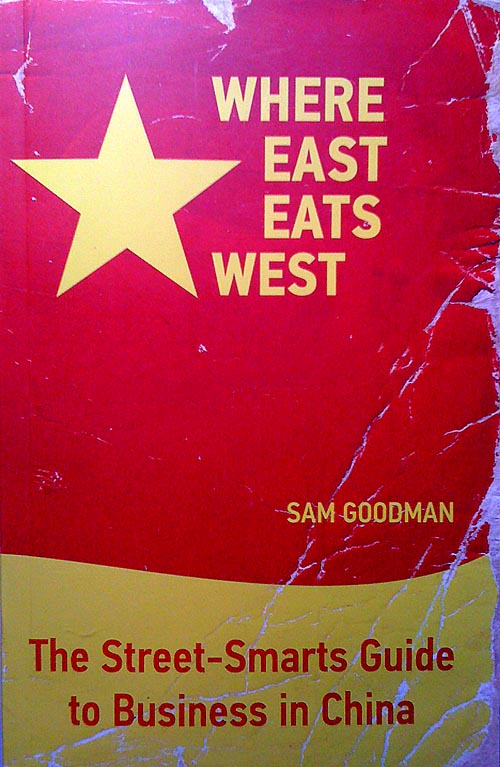
Where East Eats West: The Street-Smarts Guide to Business in China by Sam Goodman (BookSurge)

Asia By the Book welcomes our newest reviewer, Len Lee, a lifelong resident of Chengdu and a senior at Tian Fu College of Southwestern University of Finance and Economics, where he majors in Finance.

After I finished reading Where East Eats West, I had a feeling that I had not read a book. Instead I felt as if I had watched a movie where a foreigner came to China, learned the language, came up with an idea to start a business, faced various problems, found a way to solve them, and in the end wrote a book that summarized his experiences.

Where East Eats West

Where East Eats West

I have to say Sam Goodman is some kind of Chinese expert who hasn’t wasted the years that he has spent in China. In this book, Sam uses simple and short words to tell us how to do business in China, He explains the meaning of “face,” how to get Guanxi (relationships), how to deal with the government and so on. It is a very, very pragmatic book and useful not only for a foreigner who wants to come to China and do some business, but also for the Chinese. I have to admit, as someone who is Chinese, I have never read a book before which introduces Chinese business practices in such a simple and clear way until I read this one. You can easily understand this book; more importantly, you can use it.

Although Sam does a great job, there are some places where I don’t agree with him. In his book, Sam uses several chapters to talk about Guanxi: what it is and how to get it. As far as I’m concerned, in reality, we would never talk about it or use it in such a direct fashion. We view Guanxi as an art which needs wisdom and which is not that easy.

At present, more and more people don’t talk about “Guanxi”, but instead use a new term, “Zuoren”----how to be a person, or how to conduct yourself well. This is because now people see Guanxi as a derogatory term while “Zuoren” is not. It means first you should know things well within yourself; then you will be able to do things well externally. As a result, people will like you and help you.

Later in his book, Sam says ‘In mainland China, the “teamwork” model prized in the west is virtually non-existent‘. Based on my comprehension, I interpret that to mean ‘As the author sees it, Chinese people do not have the “teamwork” spirit.’

Are you ^@#$ kidding me, Sam??!!! You should take a look at the latest Chinese military and civilian parade at Tian’anmen square which celebrated the 60th anniversary of the founding of the People’s Republic of China. How much teamwork was displayed by these participants!

If you don’t agree with that, let’s look at the Beijing Olympic Game’s organizing work. The president of the IOC (International Olympic Committee) has said many times that the Beijing Olympic Games will be seen as the most successful Olympic Games ever. I think Chinese people have the strongest spirit of teamwork in the world. And don’t forget that China is a socialist society who admires groups and teams. It is not that the teamwork model doesn’t exist in China, it is you, Sam, who doesn’t find it.

As for what Sam sees as a lack of creativity, and an inability to face problems among Chinese people, these are not the real issues. In my opinion, the issue is the author doesn’t know how to bring out the teamwork spirit of his Chinese employees. To help him do this, I suggest that Sam learn from the Chinese Communist Party.

At last, I want to say that as a foreigner, Sam has a high level of knowledge about the Chinese language and Chinese culture. He can be an example that I can learn from and Where East Eats West could be—with a little more understanding of Guanxi and Chinese teamwork-- a good book that foreigners can learn from.--Len Lee

Carpe Diem by Autumn Cornwell (Square Fish)

Vassar Spore is a sixteen year old over-achiever who has her life planned out for the next ten years.  She will take AP and AAP (Advanced Advanced Placement) classes over the summer and is determined to be valedictorian of her high school class.  She has no doubts about being accepted and graduating from the college which bears her name, and she intends to win the Pulitzer Prize.

vassar

vassar

However, one calm evening Vassar receives an envelope postmarked from Malaysia—sent by the grandmother she’s never met – Gertrude.  Inside is a note that says “Happy Birthday, kiddo! Ta da!  One all-expense paid vacation backpacking through Malaysia, Cambodia, and Laos –with ME!” Along with the note is another envelope.that contains a round-trip ticket to Singapore.  Of course, Vassar decides, there is no way she has time to accept this present, not with her meticulously planned life.

But after Vassar’s parents receive a collect call from Grandma Gertrude, for some reason they allow their daughter go to Southeast Asia.  The small fragments of their conversation with Gertrude that Vassar is able to overhear contains words like “Bubble…birth…too young…rubber ball…dying…egg”.

No idiot, Vassar realizes that Grandma Gertrude has somehow blackmailed her parents into agreeing to the trip that will put such a big clink into her Life Goals.  But now she has more than enough reason to go – to find out what Gertrude’s Big Secret is.

With only two weeks to plan for her odyssey, Vassar and her parents pack whatever they think is essential to her safety and well being--which turns out to be ten fully loaded bags of luggage.  Setting off with her PTP (Portable Travel Planner) and her entourage of baggage, Vassar finds herself on an airplane to Singapore.  Having never before done anything without intensive planning, Vassar is full of anxiety as she sets foot in her first foreign country. Her anxiety intensifies as there is no Grandma Gertrude to meet her and a stranger has been sent to drive her to Malaysia.

When Vassar finally meets her grandmother, she is told to rest because they will leave for Cambodia the following morning.  She tries in vain to find out what the Big Secret is from her grandmother, who finally agrees to give her clues that will help her solve the mystery on her own.

And thus begins Vassar’s adventure.  She will go to the ancient temples of Angkor Wat, walk the streets of Phnom Penh, trek through the jungles of Laos, and learn what it means to really live life – all without a plan.  The only thing Vassar knows is that she will never be the same again.

At the end of this debut novel for young adults there is a short interview with the author. It’s here where you will find that almost eighty percent of Vassar’s adventures and situations were experienced by the author. In fact, after reading this book, you may want to take the next flight to Southeast Asia yourself.--Ernie Hoyt

Leaving Mother Lake by Yang Erche Namu and Christine Mathieu (Back Bay Books)

lake1

lake1

When adolescence strikes us, are we guaranteed to long for something beyond what we have? Even in her home village, “where children could roam at our own will and visit from house to house and village to village without our mothers’ ever fearing for our safety” and where a woman could be certain she would not be forced into marital servitude by an oppressive husband or sullied by sexual scandal, Namu still yearns for something beyond these freedoms.

Perhaps matriarchy is not what we expect. That thing we call matriarchal culture is more accurately labeled as matrilineal descent model, and is neither inherently matriarchal nor egalitarian. Taking a thorough look at the Moso peoples’ complicated social structure, Namu’s story shows us that even her female-driven culture maintains a male-dominated public presence, wherein the culture is represented solely by men through trade and travel. Of course, proximity to bridal abduction rituals and other obviously male dominant practices of the Yi culture highlights the Moso feminism, which allows women to not only own property, but to control household politics, take and refuse lovers at will and have uncontested custody of children.

Despite Namu’s relative freedom as a woman, the culturally conditioned instruction given by her mother resembles caricatures of American housewives in the 1950’s. Emphasizing traditional models of female domestic leadership, Namu’s mother says: "You're a woman, you belong in the house, to the village. Your power is in the house. Your duty is to keep the house, to be polite to old people and to serve food to the men." The younger woman feels trapped by these expectations and by the gender division that allows women power in the domestic world of home and village but still insists that “only men could leave their mothers’ houses, and even they never left just to fulfill their personal ambitions.”

After getting a taste of the world beyond her village, Namu returns and receives a coveted employment position and seems destined for local fame. But she has already realized that her ambitions are much larger than her village can sustain. By pursuing her own unorthodox ambition, Namu rebels against more than her own mother; she rebels against cultural expectation and responsibility. It seems evident, though not explicitly acknowledged, that her ability to sustain ambition and to succeed relies upon the influence of her mother’s own rebellious spirit. The headstrong mother produces an even more fiercely headstrong daughter. It is this inheritance that is the most important and the most difficult to face.

Namu’s story is one about growing up and finding her own place in the world. She brings us from halcyon days in her mountain village, where she is barely touched by the Cultural Revolution that rages through China, to the experiential instruction she receives in the beauty and hardship of the world beyond Mother Lake. The storytelling is lively and maneuvered between the book’s two authors, providing readers with the character depth and the cultural context that makes Namu’s coming of age unforgettable.--by Kristianne Huntsberger

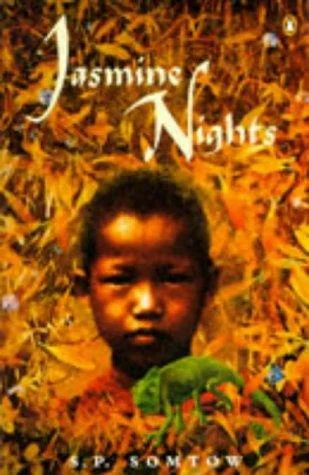
Jasmine Nights by S.P. Somtow (St. Martin’s Press)

jasmine2

jasmine2

When I worked at the Elliott Bay Book Company I was always in search of titles to recommend for twelve to fourteen year old boys. These recommendations had to be something more than the popular wizard series or the classic adventures of Verne and Kipling, whose language could be difficult for some young readers. If I were working at that bookstore now, I would be sure to have Somtow’s novel on hand.

Though not billed as a young adult book, Jasmine Nights is a perfect fit. The hero, Justin, is nearing thirteen years of age and learning the life lessons imparted by his crazy family, his crazy morphing body, and the crazy world in 1960's Bangkok where he has been deposited by his parents and where he learns about friendship, love, family and himself.

Inspired by his spunky and irreverent great- grandmother, Justin begins planning his Pinocchio transformation into a real boy. His first adventure on this course belies how far he has to go to meet his goal, which lies somewhere at the end of a list including tree climbing, swimming naked in the khlong and saying nasty words, “whose meaning I am only now starting to guess at.” His first act is kleptomania, but his shoplifted object is a Penguin Classic copy of Ovid’s Metamorphosis. Justin’s journey continuously skirts this line between his romantic, literary inclinations and his directed assimilation into even the darkest corners of the “real world.”

Like climbing trees and skinny dipping, issues of race, class and cultural conflict have never before entered Justin’s imagination until he met his African American neighbor, Virgil and becomes attracted to Virgil’s natural boyishness and his commitment to the young and painful cultural history that his family carries. It is the painful portion of Virgil’s heritage that takes the stage as the expat children begin their school year and racial tensions flare.

When Justin discovers that a Boer classmate’s best friend back in South Africa was black he asks why, then, should he and an American boy from Georgia be so cruel to Virgil. It’s different, the American boy explains, “I used to hang out with [black children] too, sometimes, but they knew better’n to piss in the same toilet or sit in the front of the bus. It ain’t that I’m prejudiced or nothing, Justin, it’s just, well, we don’t belong together.”

Justin is overcome by it all and by his own participation in the classist prejudices of his culture, noting that “there is a terrible wrongness in the world but that I am powerless to correct it. There is a disturbance in the dharma of the cosmos.”

Luckily, the book does not flatten the issue. Justin sees that, above all, it isn’t an easily definable problem since each of the boys “is the victim of a self-perpetuating cycle of injustice.” It isn’t the fault of any of them individually, he notes, “It’s the whole forsaken universe, locked in a maze without doors, all of us, each one of us and island, each one of us alone.” As part of his transformation, Justin takes it upon himself to right these great wrongs.

Perhaps the most significant weight that leans this novel toward the young adult market is the lively treatment of this very weighty subject and the fact that the hero succeeds.—Kristianne Huntsberger

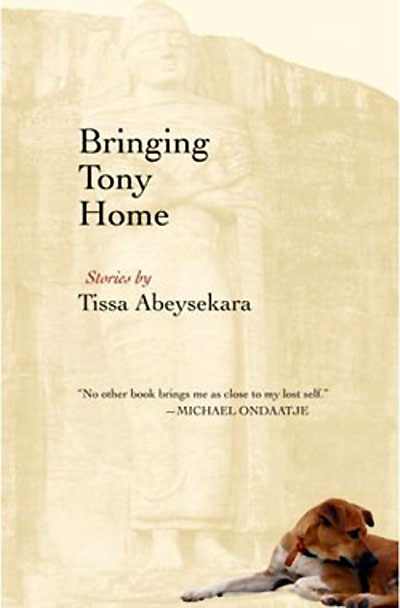
Bringing Tony Home by Tissa Abeysekara (Scala House Press)

Kristianne Huntsberger, a soon-to-be Bangkok resident, looks at memory and identity through the eyes of a Sri Lankan writer.

tony.jpg

The epigraph to Bringing Tony Home is taken from a dialogue with the Buddha, in which a man asks, "If I die and am born again as you say I will be, is that, which is reborn, the same me?" The Buddha replies that it is "neither you, nor yet any other." Tissa Abeysekara writes that, likewise, his book, "being truth recreated through memory, is neither true nor untrue." It is a collection of stories grafted with autobiography. Memory and fiction come in and out of focus the way that a sweeping camera pans over an expansive landscape where a small figure traces a road along the railroad tracks.

Locating identity within memory and the recorded history of his mid-twentieth century home in post-colonial Ceylon is a daunting task for the narrator, a boy from a privileged native family whose fortunes failed after World War II. He recalls a British fighter plane crash in 1942, and his memory of watching the wounded pilot being carted away in a hackney. His mother considers this a constructed memory because he had been only three years old "and according to her it is not possible to remember that far back and over the years I came to doubt it myself, but now I remembered the scene once more and it seemed quite real and if it was otherwise like Mother suspected, it didn't seem to matter anymore.". The family is forced to leave behind the "Big House" and the red Jaguar and Tony, the faithful family dog. The boy's mother would have him learn to adapt and his father would have him hold on to the former world. These stories explain the consequences of this division, evidenced in the narrator's internal and social struggle. When revisiting the native home of his grandmother he encounters a monk on the mountain who asks, "'from where are you?' This question in my language implies much more than your place of residence. It wants to know your origin." This is the question the narrator pursues and the one that provokes the deep introspection of Abeysekara’s stories.

When the narrator rescues his dog, marching him the distance between the abandoned Big House in Depanama and the poor one in Egodawatta, or when he rejects his father’s gift, rediscovers his adolescent lover or travels to the central hills where his grandmother was born, we understand that we are being shown more than just these incidents. We are following the narrator as he learns, finally, the meaning behind the episodes in his life. There is clarity in the distance he has gained and in remembering things past, much like glimpsing the sea from the mountaintop. As the monk he encountered near his grandmother's home explained, after years of looking, it will happen suddenly: "through that little break in the long line of hills, like through the eye of a needle, I saw the water, blue and glistening like a crest gem. Ever since then I see it. I need glasses to read, but I see faraway things." Abeysekara paused in the middle of his life to reflect on a world he no longer recognized and which had ceased to recognize him, and to glimpse the world he was unable to see before that moment.

After receiving word that Abeysekara had passed away in April of this year I re-read Bringing Tony Home. Returning to the book as tribute to the man's nostalgia, I found my own. Between the pages I had left a bus transfer and a strand of hair--a gray one--that I lost while reading a passage in which the narrator unpacks the story of his own birth, faced with entries from the diary his father kept that year. How does one react to the unraveling of one’s own myth? By recognizing the contradictions of our fathers as our own, Abeysekara answers. The relationship then between fiction and fact in these stories is the same as in the lives we live. We re-member and re-read and re-live our memories to make meaning.

Tokyo: City on the Edge by Todd Crowell and Stephanie Forman Morimura (Asia2000)

Ernie Hoyt, Tokyo resident, unearths a different sort of guidebook that illuminates his hometown.

tokyo.jpg

I can't help but love Tokyo, as it's been my adoptive city for almost fifteen years now. But to have visitors appreciate what some people have described as an urban metropolis, concrete jungle, city that never sleeps, city of contrasts or safest city in the world and a number of other cliches, it's nice to find two authors who share my special love for this city. They are Todd Crowell and Stephanie Forman Morimura. Crowell lived in Tokyo during the '50s and returned as a military intelligence officer in the '60s. He currently resides in Hong Kong where he writes for Asiaweek. Morimura moved to Tokyo in 1980 to work for the International Education Center on a two year contract. She met and married a Japanese national and made Tokyo her home.

I should point out that this is not a guide book to Tokyo. It does not have a listing of what's the best place to eat or where the cheapest place to stay can be found. It's about the city as a whole. The authors describe Tokyo as a "collection of villages" where each neighborhood has its own character and charm. It's a city in which twenty private railway lines and a dozen or so subway lines transports its million- plus dwellers to and from work everyday. A city in which the world's 500 largest companies are found,100 of which have their head offices here.

If you came to Tokyo as a first- time visitor, you would most likely land at Narita International Airport, located forty-five minutes outside the city by train. Once leaving the terminal, you would be surprised to see miles of rice fields and farmland, not the sprawling city of concrete you might have imagined. Once you board the train headed into town, the first major site you will see would be Tokyo Disneyland - however, you will still not be in Tokyo proper as Tokyo Disneyland is located in Chiba Prefecture.

You might also be surprised to find that in 1943, Tokyo was abolished as a city. It has become Tokyo-To which includes outlying suburbs and a few islands off the coast.

Tokyo Proper consists of 23 wards that each have a character all of their own. A few are introduced in this book to give an idea of the diversity of the city. In Arakawa Ward, you will find the last remaining Ding-Dong Trolley. It runs from Minowabashi to Waseda. In Sumida Ward, just north of the Ryogokukan (the building where sumo bouts take place), is a monument dedicated to those lives lost in the Great Kanto Earthquake and Fire of 1923 and to the victims of American firebombing in 1945 during World War II. (Although the book does not mention where this is, I went searching on my own and discovered it to be in a place called Yokoamicho Park.)

To get a glimpse of Tokyo's X Generation, all you have to do is head to Harajuku and Shibuya in Shibuya Ward. Not only will you find the latest in teen fashion, but you will find a host of gourmet restaurants as well. In Shinjuku Ward, you will come across Hyakunincho-- which plays home to Russian hookers and the Yakuza at night while by day it's a bustling Korea Town.

You are also introduced to some other neighborhoods that have their own claim to fame. Den-En Chofu is one such place, considered the Beverly Hills of Tokyo. Another is Yanaka-- where the residents fought to preserve old neighborhoods and buildings, and now use them as ateliers and boutiques. There is the Odaiba District -- Tokyo's waterfront city which could be compared to New York's Coney Island.

For anybody with an interest in Tokyo, this will be a delightful trip through an amazing place. I'm still finding new places to explore and new things to experience-- even after spending fifteen years in the middle of this wonderful city.

The Housekeeper and the Professor by Yoko Ogawa, translated by Stephen Snyder (Picador)

Asia By the Book is delighted to receive this review from Ryan Mita, former bookseller at Seattle's Elliott Bay Book Company, a traveler who has volunteered his time and energy in South America and Asia, and a librarian-in-the-making.

In a shabby cottage in Central Japan lives a brilliant professor of mathematics, who wears a plain suit and moldy shoes. Handwritten notes are clipped onto every inch of his suit, tangible reminders of his identity. The most important note reads: "My memory lasts only 80 minutes." His new housekeeper is a single mother, an empty person who agrees that she contains a zero inside.

prof.jpg

The housekeeper and the professor make an unlikely pair, joined by her son, nicknamed Root for his flat head. The professor will handwrite a note to remember their presence: "The new housekeeper…and her son, ten years old."

The plot unfolds unhurriedly as Ogawa skillfully blends little victories into larger, more painful setbacks. The housekeeper treats her son and the professor to see their beloved baseball team, the Hanshin Tigers. Root idolizes the current team and the professor had memorized the team's statistics until 1976, the season of the car accident that impaired his memory. This exciting shared experience will press the professor to the limits of exhaustion. After returning to the cottage, he develops a fever and slumbers for three days.

The housekeeper remains by his bedside, nurturing the professor back to health. However, the professor's sister-in-law reports this rule violation to the agency and the housekeeper is assigned to another client. As she mops the floor at a tax consultation office, she begins to believe in mathematics and "the sense that this invisible world was somehow propping up the visible one." Soon after, Root reaches out to the professor and the housekeeper is invited back.

During the hot summer, the professor devotes himself to solving a problem posed by the Journal of Mathematics. After two months of quiet concentration, the puzzle is completed and the housekeeper takes the proof to the post office. Satisfied, she purchases a few clean items for the professor and returns to the cottage in 70 minutes. The professor does not recognize her and begins their relationship again with the question: "How much did you weigh when you were born?"

Although his mind is mathematically keen, the professor's true gift is his ability to draw people together. For his elegant proof, the journal awards the professor first prize and the small family sets out to find a suitable gift. They decide to add to the professor's nearly complete baseball card collection. Together, the mother and son will crisscross the streets of an unnamed city in Hyogo prefecture. They will ride the "dingy elevators" seeking the elusive piece. And as they search, a new world opens up for Root, a world he shares with his friend and mentor, the professor.

One of the fascinating aspects of this novella is the clear and natural voice Ogawa writes with. Her voice allows Ogawa to create a pace, unmarred by actual names or specific places. Her seemingly simple plot hints at a larger story, like the intricate details in the foreground of a vivid painting, and makes The Housekeeper and the Professor a quietly astonishing book.

To Myanmar With Love: A Travel Guide for the Connoisseur edited by Morgan Edwardson and photographs by Steve Goodman (ThingsAsian Press)

Myanmar is often in the news and often for reasons that make people determined that they will never set foot in the place. To find any information about what lies beneath the government's actions and policies or the latest national disaster takes such effort that the casual inquirer is likely to give up long before any results are found. And yet a lingering desire to know about the people, the culture, the daily life of this much-maligned country continues to tease curiosity, unsatisfied--until now.

myanmar.jpg

"You have to go," the editor of To Myanmar With Love was told by a traveler, "It's such an amazing place and the people are so sweet." Morgan Edwardson put aside his qualms and set off to see Myanmar for himself. He was so delighted that he "returned three more times in the following year. Each visit was unforgettable." He goes on to say that the people of Myanmar, "not the government, are the focus of this book."

And they are--as contributors to the essays in the book as well as the subjects of the essays, generously and wholeheartedly eager to share their country and their culture with the outside world. As one Myanmar citizen said, "Show people that my country is not some sort of hell."

This book does this so well and so vividly that readers will race through the essays, vicariously savoring noodles with Yangon gourmet Ma Thanegi, having a traditional teashop breakfast with Win Thuya in Bagan and other places, carbo-loading with Giles Orr before tackling the sightseeing glories of the Shwedagon Pagoda. With Robert Carmack they will explore the colonial glories of the Strand Hotel in Yangon, learn the pleasures of being derailed in Bago with Peter Walter and a friendly railway clerk, and watch the launching of fire balloons that are three stories high with Anne Marie Power in the Shan State town of Taunggyi.

Breakfast with 2,700 monks in the company of Morgan Edwardson, explore a forest where spirits reside with Hpone Thant, visit a market where not a single souvenir can be found with Guillaume Rebiere where "colors, fragrances, and sounds are all sewn together into a patchwork." Deep sea dive in the Myeik Archipelago with Graydon Hazenberg, find the elusive Ayeyarwady dolphins with Hpone Thant and learn how these extraordinary creatures help the local fishermen. Take a bicycle, a boat, a pony cart, a trishaw, or a slow, slow train. Learn the joys of chewing betel or the casual elegance of wearing a longyi or savor the sweetness of tamarind flakes dissolving on the tongue.

The two features that appear in every volume in the To Asia With Love series of guidebooks are particularly outstanding in this book.

Paying It Forward: Suggestions for giving back while you're on the road reminds readers that "a donation can include more than just money." Viola Woodward tells how travelers can help spruce up schools and monasteries with a coat of fresh paint by supplying the paint and the labor. Sudah Yehudah Kovesh Shaheb's chance encounter with beach vendors leads to a visit to their homes and a trip with then to Yangon. Jan Polatschek tells how to teach English at monasteries while passing through town. Kyaw Zay Latt explains how to help in orphanages, with a list of places to visit with addresses, and Janice Neider provides a list of items to give children instead of money or candy,

Resources for the Road offers a variety of annotated reading lists, suggestions for language learning materials, a wonderful essay on the bookshops of Yangon by James Spencer, and a comprehensive list of informational websites. And throughout the entire book, Steve Goodman's photographs reveal the faces of the Myanmar people and the beauty that is found in their country.

To go or not to go? That is a choice we all are free to make on our own. To know or not to know? For years we have had little-to-no choice in this matter. Now we can choose, and with that choice, now we can know the culture, customs, cuisine, as well as the luminous and gracious people, of this isolated country.

Available at ThingsAsian Books

More books on Myanmar at ThingsAsian Books