Kinami Mayumi's Aomori Apple Story 1 by Mayumi Kinami, translated by Takahiro Ido (Ringo History Research Center) ~Ernie Hoyt
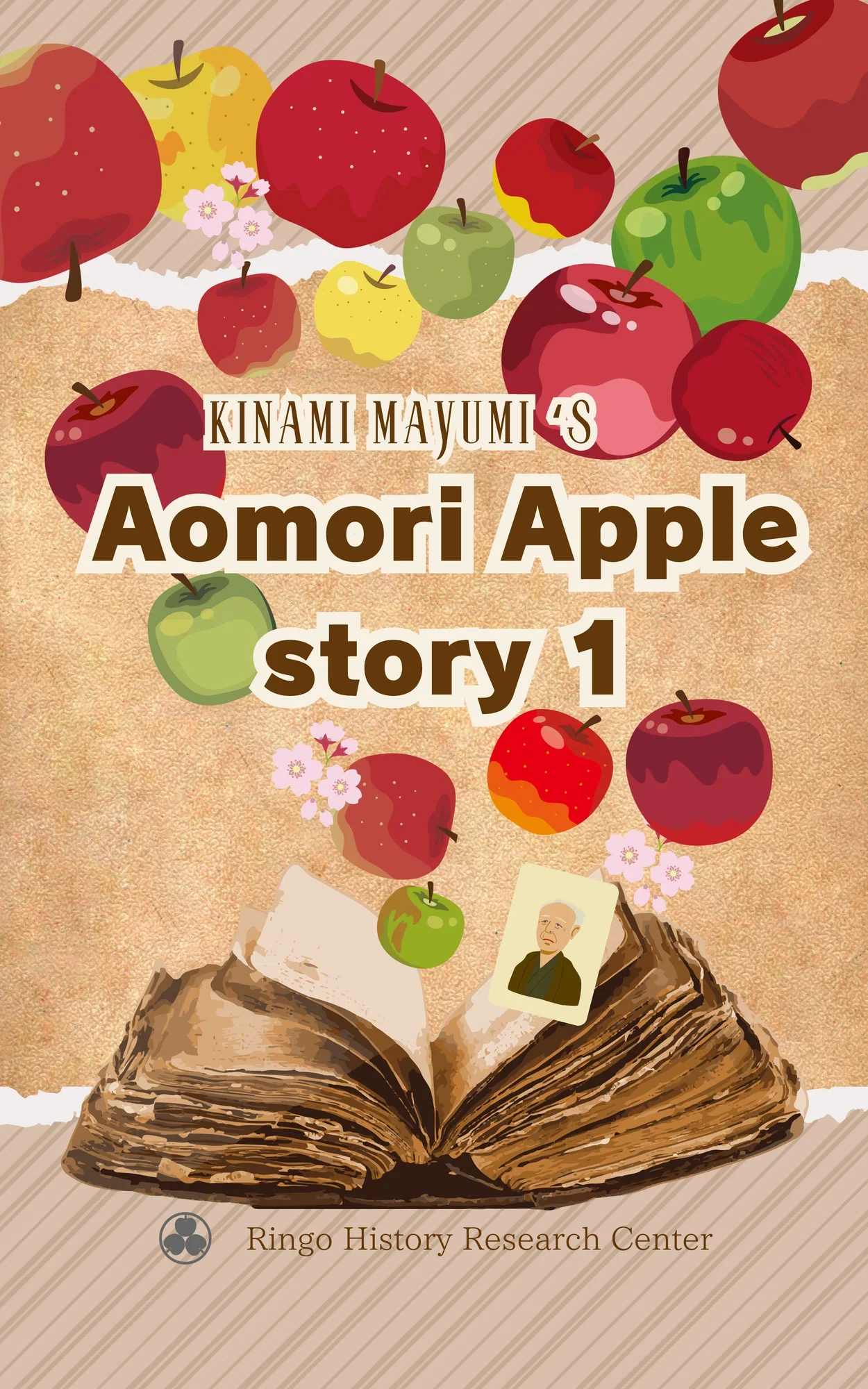
2025 marks the 150th anniversary of apple cultivation in Aomori Prefecture, Japan. Mayumi Kinami who was born into a family of apple grower, decided to write a book about the history about it. The book was independently published in May of 2025 in Japanese with the title of [靑森りんご物語 ①] (Aomori Ringo Monogatari 1). The English version was published later the same year with the title of Kinami Mayumi’s Aomori Apple Story 1.
In this first volume about the history of apple cultivation in Aomori, Kanami begins by discussing why it began. She explains that it “began as an unemployment policy of feudal warriors who lost their jobs after the Meiji Restoration”.
Three apple saplings arrived in the Aomori Prefectural Office in the spring of 1875. A man by the name of Tate-e Kikuchi, a former samurai, planted them on the grounds of the Prefectural office. According to Kinami, Tate-e Kikuchi is the father of apple cultivation in Aomori. He “dedicated his life to apples and other agricultural products”.
However, Kinami explains that it wasn’t just Tate-e Kikuchi who was responsible for the growth of the apple cultivation business. In order to get a real understanding of apple cultivation in Aomori Prefecture, we also need to learn about these three other people - Tsugaru Tsugaruakira, the 12th daimyo (lord) of the Hirosaki Domain, Daidoji Shigeyoshi, a chief retainer of the Hirosaki Clan. Shigeyoshi was also the founder of the Aomori Michinoku Bank, Kakuhiro Company and other companies, and Naritomo Sugiyama, another chief retainer.
Kinami also says apple cultivation in Japan wouldn’t have been possible without these people - Shungaku Matsudaira, Gartner from Germany, Lewis Boehmer, and John Ing.
Matsudaira is thought to be the first Japanese to make and eat an apple. Gartner is known for establishing a large apple orchard in Nanae in Hokkaido, and Boehmer taught the grafting method to Kikuchi.
John Ing was a teacher. He was brought from Yokohama to Hirosaki to teach at the To-o Gijuku, “the only school in Tohoku at the time that employed foreign missionaries”. He fed apples to his students.
There are many others that were involved with the growth of the apple business in Aomori. After the introduction of the main people involved in the apple business, then the real story of Aomori Apple begins.
The book consists of five chapters. The first chapter goes way back to the prehistoric era of the Aomori Apple and is divided into two sections. The first section deals with where the apples came from while section two deals with the dawn of the apple industry in the Tsugaru Plain.
Chapter 2 deals with the beginning of apple cultivation in Aomori Prefecture. In this section, Kinami gives a more detailed account of Tsugaru Tsuguakira, Daidoji Shigeyoshi, and Naritomo Sugiyama.
Chapter 3 goes into detail about the life of Tate-e Kikuchi while chapters 4 and 5 deal with “Apple Bubble” and Tate-e Kikuchi’s successors. This entire book is just a prelude to Part 2, in which Kinami will discuss the history of the Fuji apple, one of the world’s most widely produced varieties of apples.
If you can’t wait for Part 2 to come out, Kinami has also created a card game called Apple Pie. She based it on the game of mahjong. She thought, “if I incorporate the history of apple cultivation into the yaku (hand) of mahjong, players will learn about it while enjoying the game.
It is a fascinating subject and an enjoyable read. However, I think the publishers should have hired a more qualified translator for the English version. Sill, I am looking forward to reading the sequel and no, I have not played “Apple Pie” as I don’t understand the rules of mahjong.