Japanese Yokai : Explore the Magical World of Monsters, Demons and Mythical Creatures by Fleur Daugey (Tuttle) ~Ernie Hoyt
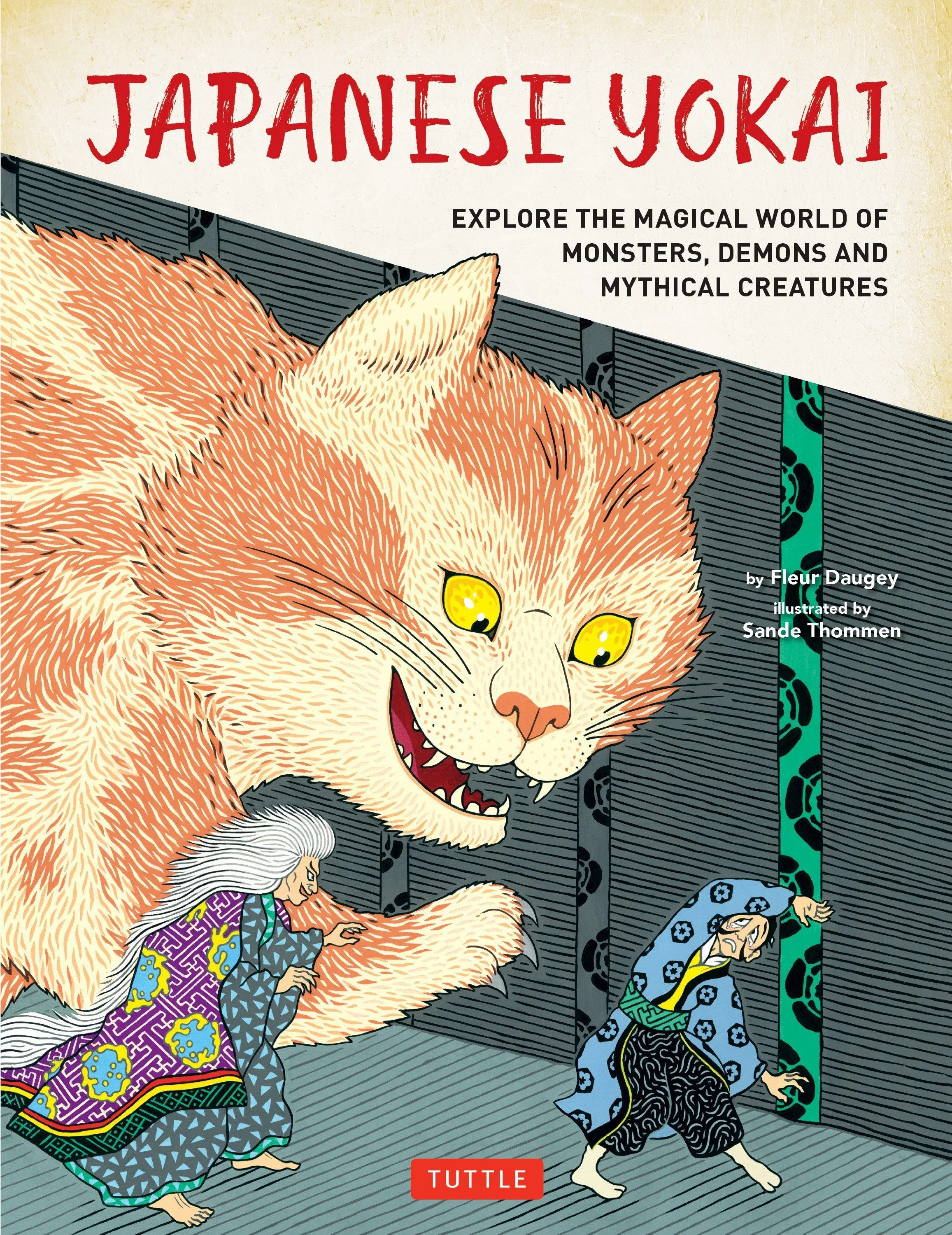
I’m fascinated by Japanese yokai culture. They have previously been featured on this blog (Yokai Attack! The Japanese Monster Survival Guide (Asia by the Blog, May 2024). Japanese Yokai is aimed more towards children and is a great introduction to the subject. It was originally published in the French language as Le Monde Etrange des Monstres Japonais in 2017 by Actes Sud.
Fleur Daugey gives thanks to Japanese manga master Shigeru Mizuki whose works made her “dream of strange and mysterious yokai”. I am also a big fan of Mizuki and used to watch an animated series on television titled during my elementary school years when I lived in Japan. The title of the program was [Ge Ge Ge no Kitaro]. Every episode would feature a yokai.
There is no definite one to one word in English to translate yokai. It is often translated as a demon, creature, monster, or spirit. However, in Japanese, yokai can refer to shape-shifters, demons, and even haunted objects. They can help or harm, they can be nice and harmless or they can be violent and wrathful. They usually appear at dusk, the time between daylight and before it gets dark. They can move freely from the spirit world to the world of humans. “No matter what, they’re out there, living among us with their many shapes and forms.”
Pokemon is a popular anime series that has been distributed and translated into different languages throughout the world. The title means “pocket monster” and many of the characters were inspired by yokai.
It is believed that yokai originated in the Heian period (794-1185) and blended Shinto beliefs influenced by Chinese Taoism to explain the unexplainable. The images of yokai became popular in the Edo period (1603-1868) as they were featured in Ukiyo-e woodblock prints, the most famous being Toriyama Seiken who drew the Hyakki Yagyo, translated into English as Night Parade of 100 Demons with a a yokai called Nurarihyon at the head of the procession.
Some of the most common yokai are animal or animal spirits. The kitsune is a fox. These yokai can take the shape of a beautiful woman and they live to trick people. “That piece of candy you’ve just been given? Look out, it’s been turned into a turd.”
The tanuki is a raccoon dog. They also like to have fun and pull pranks. They can turn themselves into a human or even an object. They love to drink sake (Japanese rice win) and have very large testicles.
One of the most common yokai in Japanese folklore is the kappa. They have a bird’s beak, a turtle shell, frog skin, and webbed feet. They also have a plate on top of their head that is filled with water. They love to live in water such as in rivers, lakes, swamps, and even rice fields. If the water spills from the plate on their head, they will die.
The tengu is also a very common yokai you will see at shrines and temples. Their most prominent feature is their long red nose. Some of them may even have wings. If you come across a tengu and are kind to them, they may even help you, but if you make them angry, “they can be very nasty when they want to be!”.
Japanese Yokai is beautifully illustrated by Sande Thommen. She gives thanks to the Ukiyo-e masters Toriyama Sekien, Katsushika Hokusai, Utagawa Kuniyoshi, and Utagawa Hiroshige. Her thanks would not be complete without mentioning Shigeru Mizuki “whose fascinating images of the world of yokai influenced her while illustrating this book”.
The next time you see a magical creature or if a prank has been pulled on you, don’t jump to conclusions and blame one of your friends or a human, you may just have been the victim of a yokai.